

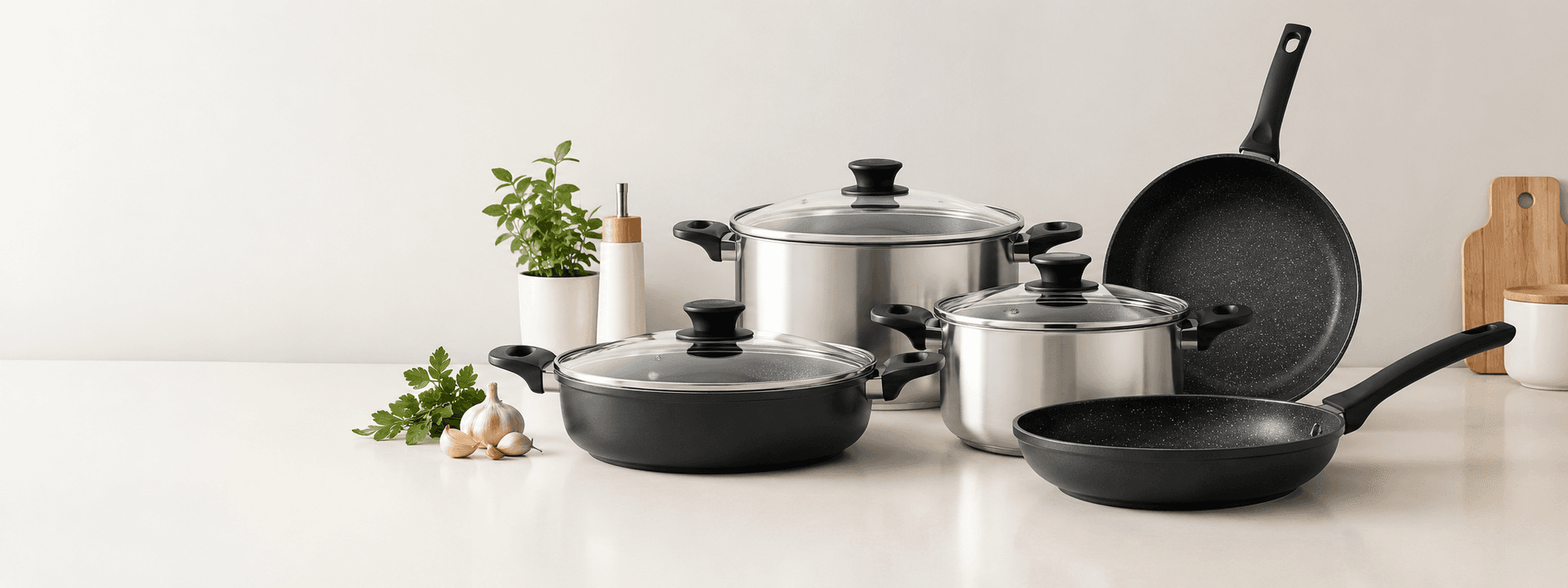
Cookware is one of the most reliable categories in home and kitchen retail. Every household needs it, products wear out and get replaced, and demand spikes around weddings, festivals, housewarmings and the holiday season. For retailers, the challenge is choosing the right mix of products, materials and price points. This guide covers the main cookware categories to stock, what to look for when buying wholesale, and how to build a range that sells.
Why Cookware Is a Smart Wholesale Category
Steady repeat demand: Non-stick pans and pots wear out and need replacing every few years.
Gifting appeal: Cookware sets are a top pick for wedding and housewarming gifts.
Healthy margins: Sets and premium materials offer good markups compared with single basic items.
Wide customer base: From students setting up a first kitchen to families upgrading, there is a buyer for every budget.
1. Stainless Steel Cookware
Stainless steel is the workhorse of the kitchen: durable, non-reactive, dishwasher-safe and long-lasting.
Why retailers should stock it:
Lasts for years, so customers trust the value.
Doesn't react with acidic foods like tomato or tamarind.
Suits all stovetops, and many ranges are induction-compatible.
What to check when buying wholesale:
Steel grade: 18/10 or 304 food-grade stainless is the premium standard. 18/0 or 201 is a budget option.
Base construction: Tri-ply or encapsulated bases (aluminum or copper core) give even heat and prevent hot spots.
Handles and lids: Riveted, heat-resistant handles and tight-fitting glass or steel lids are signs of quality.
Finish: Mirror or satin polish with no rough edges.
Best sellers: Stockpots, saucepans, kadai/woks, pressure cookers, and multi-piece sets.
2. Granite-Coated Cookware
Granite (stone-effect) cookware has become popular because it looks stylish, feels lightweight and offers non-stick performance with a modern, natural-stone appearance.
Why it sells:
Attractive speckled finish that stands out on shelves.
Requires less oil, appealing to health-conscious buyers.
Usually priced affordably, making it great for mid-range shoppers.
What to check:
Coating quality: Look for PFOA-free, multi-layer coatings that resist scratching and peeling.
Body material: Forged or die-cast aluminum bodies are more durable than thin pressed ones.
Induction compatibility: Many customers now ask for this, so an induction-ready base is a strong selling point.
Retail tip: Display it with a cooking demo or a care card (use wooden or silicone utensils, avoid metal tools) to reduce returns and complaints.
3. Non-Stick Pans
Non-stick pans are the fastest-moving item in most cookware aisles. They are quick, easy to clean and ideal for everyday cooking like dosa, omelettes and stir-fries.
Product range to offer:
Fry pans in multiple sizes (20, 24 and 28 cm)
Dosa tawas and flat griddles
Kadai and deep fry pans
Grill and pancake pans
What to check:
Coating thickness and layers: More layers generally mean better durability.
Safety certifications: Ask for PFOA-free and food-safe documentation.
Base thickness: A thick, flat base prevents warping and heats evenly.
Ergonomics: Cool-touch, comfortable handles.
Stocking strategy: Offer a good-better-best range, with a budget option for volume sales and a premium option for customers who want longevity.
4. Casserole Pots
Casseroles (hot pots) are great for serving and keeping food warm, making them a favorite for family meals, gatherings and gifting.
Why they're a profitable add-on:
Strong gifting category, especially in sets of 2, 3 or 4 sizes.
Used for rice, curries, biryani, soups and baking.
Customers often buy them as a "serving upgrade" for guests.
Options to consider:
Cast iron / enameled: Premium, excellent heat retention, higher price point.
Ceramic and stoneware: Attractive and good for oven-to-table use.
Insulated stainless steel: Keeps food warm for hours, popular for lunch and festive serving.
Glass casseroles: Microwave and oven friendly.
What to check: Lid fit, handle strength, finish quality and packaging that protects against chips and cracks during transit.
5. Cookware Sets
Sets are where retailers can increase average order value. Customers like the convenience and the sense of getting more for their money.
Popular set types:
Starter sets (3 to 5 pieces): Great for students and first-time buyers.
Family sets (7 to 10 pieces): The bestselling range for most households.
Premium or gift sets (12+ pieces): Ideal for weddings and the festive season.
Combo sets: For example, a non-stick fry pan, kadai and tawa bundle.
Tips for building a set range:
Make sure pieces are matching in color, material and handle style.
Include the most-used items (fry pan, saucepan, kadai, lids).
Offer attractive gift packaging to boost perceived value.
Price sets slightly below the total of individual pieces to encourage bundling.
How to Choose the Right Wholesale Supplier
Verify material quality: Ask for material specs, grade certificates and samples before placing a bulk order.
Check minimum order quantities (MOQ): Find flexible MOQs so you can test new lines without heavy stock risk.
Compare pricing tiers: Look for volume discounts and clear price breaks.
Ask about warranty and returns: A supplier that backs their product reduces your risk.
Review packaging: Strong, retail-ready boxes lower breakage and look better on shelves.
Confirm lead times: Reliable delivery matters, especially before peak seasons.
Pricing and Merchandising Tips
Tier your range: Stock budget, mid-range and premium so every customer finds something.
Group by material: Keep stainless, non-stick and granite sections clearly separate.
Use eye-level placement for high-margin sets.
Plan seasonal promotions around festivals, wedding season and year-end sales.
Bundle smartly: Pair cookware with spatulas, ladles or storage items for extra sales.
A well-planned cookware range blends everyday essentials like stainless steel and non-stick pans with higher-margin items like granite-coated cookware, casserole pots and gift-worthy sets. Focus on quality, offer choice across price points, and partner with a supplier who is consistent. Do that and cookware can become one of the most dependable earners in your store.
Looking to stock your shelves? Contact us today for wholesale pricing, product catalogs and bulk order details.